
 Image 1 of 1
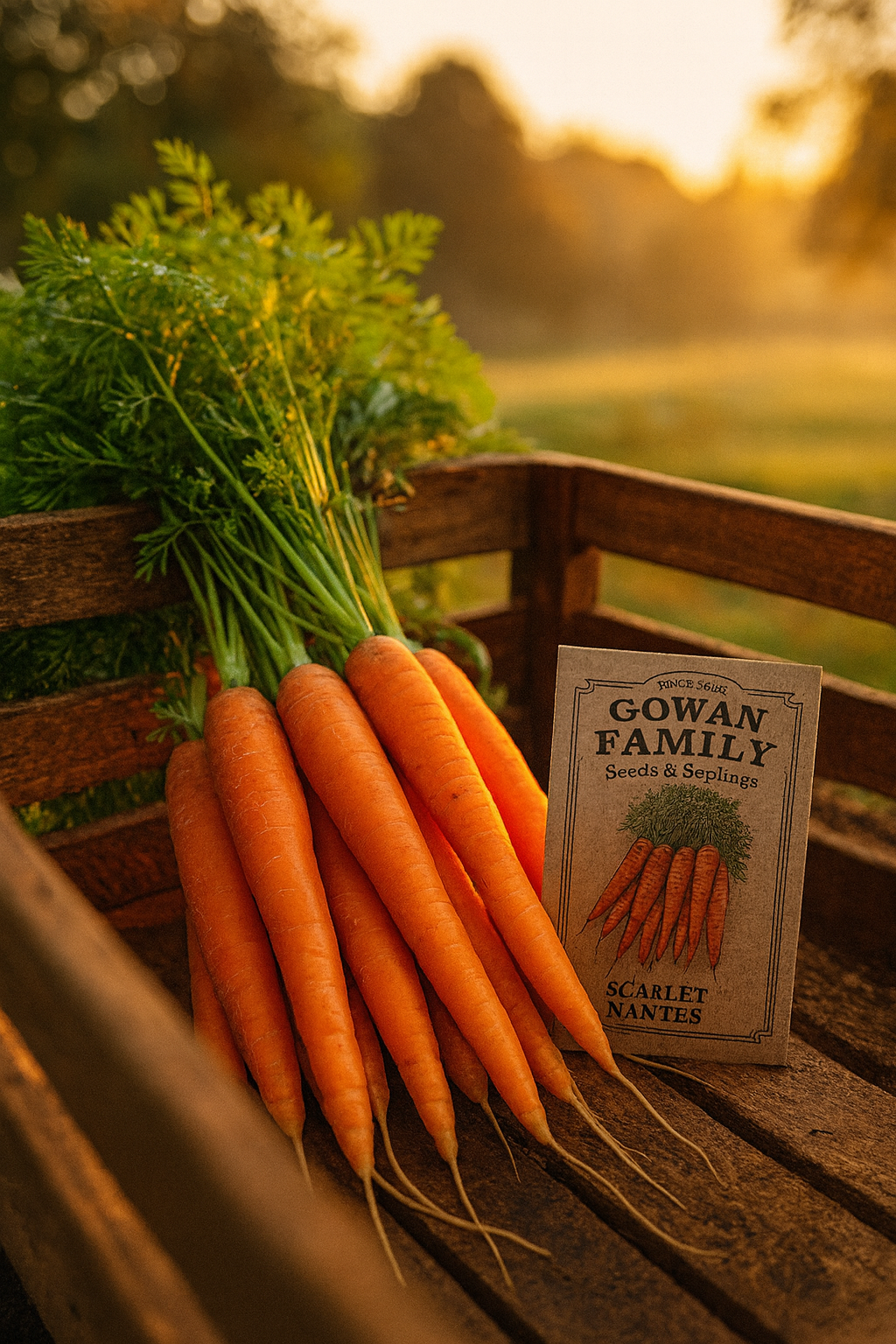
Scarlet Nantes Carrot (Daucus carota subsp. sativus)
Sweet, crisp, and straight—classic orange roots bred for flavor and reliable yields in Pennsylvania gardens.
Why We Love It in Pennsylvania
Scarlet Nantes is a cool-season favorite that handles our early springs and long autumns with ease. The blunt, uniform 6–7" roots size up steadily in loose PA soils and hold sweetness when nights turn cool. In Zones 5–6 (and neighboring 4 & 7 microclimates), it’s a go-to for spring sowings and fall harvests, with best flavor after a light frost.
A Living Link to Our Agricultural Past
Nantes-type carrots have been a staple of Mid-Atlantic kitchen gardens since the 1800s—dependable, fine-grained, and easy to store. From farmhouse root cellars to Saturday market benches, this heirloom kept Pennsylvania tables bright through winter. Planting Scarlet Nantes carries that tradition forward—honest food from good earth.
Quick Facts
Type: Heirloom Nantes-type carrot
Days to Maturity: ~65–70 days
Root: 6–7", blunt tip, uniform, fine texture
Flavor: Sweet, crisp, and mildly aromatic
Best For: Fresh eating, roasting, juicing, and storage
How to Grow Scarlet Nantes in PA
When to Plant
Spring: Direct sow as soon as soil is workable and 45–70°F (often early–mid April in much of PA).
Fall: For peak sweetness, sow mid-June through late July for harvest September–November; cover in early frosts to extend.
(Higher elevations/northern counties: shift 1–2 weeks later in spring and earlier in fall.)
Site & Soil
Light: Full sun.
Soil: Loose, deep, stone-free loam; pH 6.2–6.8. Avoid fresh manure—excess nitrogen causes forked roots.
Moisture: Keep evenly moist; steady moisture prevents bitterness and cracking.
Sowing & Spacing
Direct Sow: ¼" deep in finely prepared seedbed; rows 12–18" apart.
Thin: To 2" between plants once 1–2" tall (essential for straight, full roots).
Germination Tip: Carrots sprout slowly. After sowing, keep the surface damp; you can lay a board, burlap, or row cover over the row for 3–5 days to hold moisture, then remove at emergence. Succession sow every 2–3 weeks for a longer picking window.
Care Tips
Hand-weed carefully; carrots dislike root disturbance.
Light mulch after emergence helps hold moisture and suppress weeds.
Pair with onions or scallions to confuse pests and save bed space.
Harvest
Pull when roots color up and reach ¾–1" diameter; flavor deepens after light frosts.
For storage, harvest before hard freeze, twist off tops, and store unwashed at 32–40°F with high humidity (plastic tote with vent holes, or boxes of damp sand/peat).
Common PA Challenges
Forked/crooked roots: Caused by stones, clods, or fresh manure—loosen and sift bed.
Cracking: Irregular watering—keep moisture steady.
Leaf blights (Alternaria/Cercospora): Improve airflow, water early, rotate beds, remove debris.
Root pests (wireworms): Avoid fresh sod ground; use clean rotations.
In the Kitchen
Scarlet Nantes brings bright sweetness to snack trays, slaws, and lunch boxes; it roasts to caramel perfection and juices beautifully. Fine texture means tender coins and gorgeous ribbons.
What You’ll Receive (Gowan Heritage Seeds)
Approx. seeds per packet: ~1,000
Germination: Current test on file; packed for high viability
Non-GMO, untreated, open-pollinated
Packed For Year & Lot: Printed on packet for traceability
Gowan Heritage Note: We honor Pennsylvania’s seed-saving roots by choosing proven heirlooms, maintaining up-to-date germination tests, and sharing planting windows that match our local seasons—so your garden keeps the story growing.
Sweet, crisp, and straight—classic orange roots bred for flavor and reliable yields in Pennsylvania gardens.
Why We Love It in Pennsylvania
Scarlet Nantes is a cool-season favorite that handles our early springs and long autumns with ease. The blunt, uniform 6–7" roots size up steadily in loose PA soils and hold sweetness when nights turn cool. In Zones 5–6 (and neighboring 4 & 7 microclimates), it’s a go-to for spring sowings and fall harvests, with best flavor after a light frost.
A Living Link to Our Agricultural Past
Nantes-type carrots have been a staple of Mid-Atlantic kitchen gardens since the 1800s—dependable, fine-grained, and easy to store. From farmhouse root cellars to Saturday market benches, this heirloom kept Pennsylvania tables bright through winter. Planting Scarlet Nantes carries that tradition forward—honest food from good earth.
Quick Facts
Type: Heirloom Nantes-type carrot
Days to Maturity: ~65–70 days
Root: 6–7", blunt tip, uniform, fine texture
Flavor: Sweet, crisp, and mildly aromatic
Best For: Fresh eating, roasting, juicing, and storage
How to Grow Scarlet Nantes in PA
When to Plant
Spring: Direct sow as soon as soil is workable and 45–70°F (often early–mid April in much of PA).
Fall: For peak sweetness, sow mid-June through late July for harvest September–November; cover in early frosts to extend.
(Higher elevations/northern counties: shift 1–2 weeks later in spring and earlier in fall.)
Site & Soil
Light: Full sun.
Soil: Loose, deep, stone-free loam; pH 6.2–6.8. Avoid fresh manure—excess nitrogen causes forked roots.
Moisture: Keep evenly moist; steady moisture prevents bitterness and cracking.
Sowing & Spacing
Direct Sow: ¼" deep in finely prepared seedbed; rows 12–18" apart.
Thin: To 2" between plants once 1–2" tall (essential for straight, full roots).
Germination Tip: Carrots sprout slowly. After sowing, keep the surface damp; you can lay a board, burlap, or row cover over the row for 3–5 days to hold moisture, then remove at emergence. Succession sow every 2–3 weeks for a longer picking window.
Care Tips
Hand-weed carefully; carrots dislike root disturbance.
Light mulch after emergence helps hold moisture and suppress weeds.
Pair with onions or scallions to confuse pests and save bed space.
Harvest
Pull when roots color up and reach ¾–1" diameter; flavor deepens after light frosts.
For storage, harvest before hard freeze, twist off tops, and store unwashed at 32–40°F with high humidity (plastic tote with vent holes, or boxes of damp sand/peat).
Common PA Challenges
Forked/crooked roots: Caused by stones, clods, or fresh manure—loosen and sift bed.
Cracking: Irregular watering—keep moisture steady.
Leaf blights (Alternaria/Cercospora): Improve airflow, water early, rotate beds, remove debris.
Root pests (wireworms): Avoid fresh sod ground; use clean rotations.
In the Kitchen
Scarlet Nantes brings bright sweetness to snack trays, slaws, and lunch boxes; it roasts to caramel perfection and juices beautifully. Fine texture means tender coins and gorgeous ribbons.
What You’ll Receive (Gowan Heritage Seeds)
Approx. seeds per packet: ~1,000
Germination: Current test on file; packed for high viability
Non-GMO, untreated, open-pollinated
Packed For Year & Lot: Printed on packet for traceability
Gowan Heritage Note: We honor Pennsylvania’s seed-saving roots by choosing proven heirlooms, maintaining up-to-date germination tests, and sharing planting windows that match our local seasons—so your garden keeps the story growing.